Residential Excavation Projects in Kentucky: Expert Site Preparation and Foundation Services
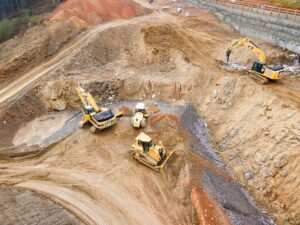
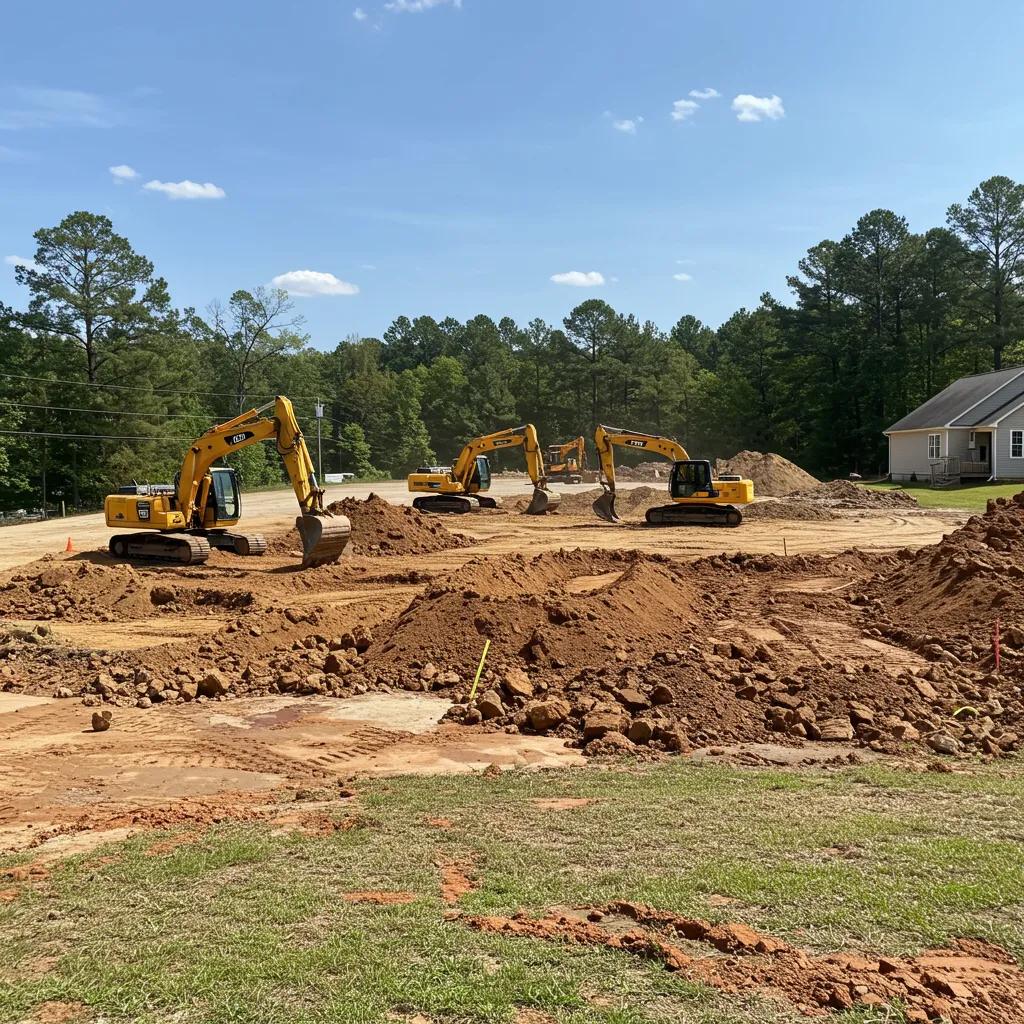
Residential excavation prepares a building site by removing, relocating, and shaping soil and surface materials so foundations and utilities perform as intended, protecting structures from settlement and water damage. Earth Works, LLC is a Kentucky-based excavation contractor offering local homeowners expert sitework, grading, mass earthwork, and utility construction; this article uses that practical experience to frame guidance and invite readers to request a consultation or estimate. Homeowners will learn what residential excavation includes, how proper excavation preserves foundation stability, which grading and drainage options reduce water risk, and how utility trenching, demolition, and permitting factor into budgets and schedules. The guide maps step-by-step processes, cost factors, and preparation checklists to help you plan a new house foundation or major site alteration with confidence. After an overview of core services and common challenges, the article explains foundation types, land clearing sequences, drainage options like French drains, and safe trenching practices—each section closing with actionable homeowner next steps. Read on to gain concrete criteria for contractor selection, cost transparency, and a straightforward way to request a site assessment from a local partner.
What Are Residential Excavation Services and Why Are They Essential?
Residential excavation services are the sitework and earthmoving tasks that create a stable platform for homes by shaping grades, removing unsuitable material, and preparing foundations and utilities for construction. This work functions by exposing and adjusting subsurface conditions—such as compacting bearing strata and installing drainage—that directly reduce settlement and moisture intrusion risks. Proper excavation delivers three primary benefits: stable foundation performance, predictable construction scheduling, and compliance with local building and stormwater requirements; these outcomes lower long-term repair risk for homeowners. Understanding the scope of residential excavation helps owners budget accurately and communicate requirements to contractors, which reduces delays and change orders.
Residential excavation typically includes several distinct service areas that together form site preparation and foundation readiness, described next and summarized in a short list for easy reference. The following list outlines core components homeowners should expect when planning residential earthwork.
- Land clearing and vegetation removal: Removing trees, brush, and stumps that interfere with site grading and construction access.
- Topsoil stripping and stockpiling: Separating organic topsoil for reuse and preserving subgrade integrity for foundations.
- Foundation footprint excavation: Digging precise trenches or pads for slab, crawl space, or basement foundations.
- Utility trenching and backfill: Excavating trenches for water, sewer, gas, and electrical services and restoring proper bedding and compaction.
- Grading and drainage installation: Shaping finished grades, swales, and stormwater features to direct water away from structures.
These service elements form the technical backbone of a residential project, and recognizing them clarifies contractor estimates and expected deliverables. With these components in mind, the next section explains the specific tasks included within each service so homeowners can evaluate scopes and quotes effectively.
What Does Residential Excavation Include?
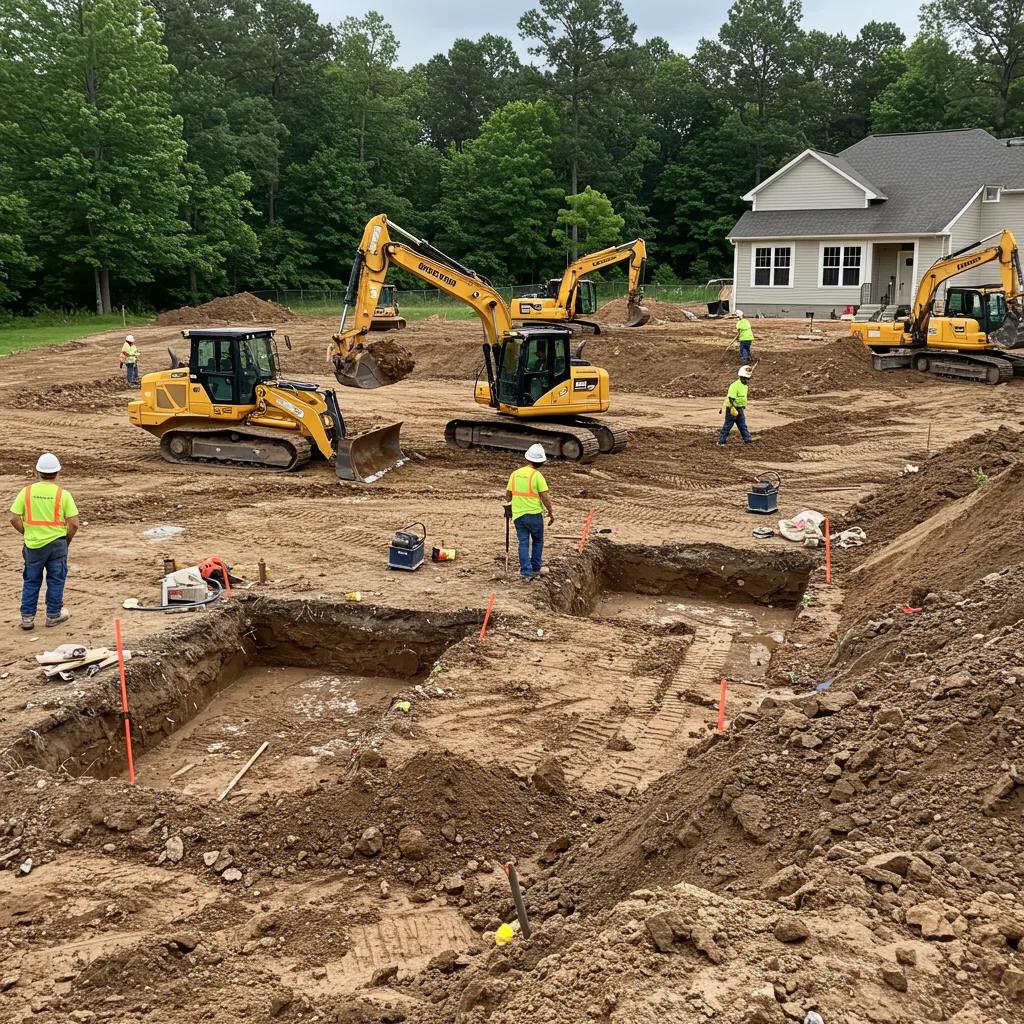
Residential excavation includes a sequence of tasks that begin with site assessment and end with verified subgrade ready for construction; each task uses specific equipment and produces measurable outcomes. Typical equipment includes excavators, bulldozers, graders, trenchers, and compactors—machines that remove vegetation, strip topsoil, set grades, dig foundations, and place engineered fill. The practical outcome of these activities is a prepared subgrade: compacted, tested, and shaped to designed slopes that protect the structure from water and settlement. Knowing these distinct activities helps homeowners compare bids by task rather than by lump-sum price, ensuring transparency in what is delivered.
Recognizing how these tasks interrelate also points to common owner responsibilities such as providing site access and sharing design plans early. With a clear task breakdown, homeowners can prepare permits and arrange utility locates before heavy equipment mobilizes, which reduces change orders and scheduling risk for both parties.
How Does Proper Excavation Impact Home Foundation Stability?
Proper excavation influences foundation stability by controlling bearing capacity, moisture conditions, and the distribution of loads into competent soil layers; these mechanisms reduce long-term settlement and water-related damage. Techniques such as removing organic topsoil, placing engineered fill, and achieving required compaction densities create a uniform bearing surface that evenly transfers structural loads to the ground. Additionally, grading and drainage strategies that divert surface and subsurface water away from footings prevent hydrostatic pressure and freeze-thaw cycles that cause differential movement. The combined engineering and construction controls translate into a foundation with predictable performance and lower maintenance costs.
Understanding these links between excavation practices and foundation behavior enables homeowners to ask targeted questions about compaction testing, drainage plans, and subgrade confirmation before construction begins.
What Are Common Challenges in Residential Excavation Projects?
Residential excavation projects commonly encounter restricted access on tight lots, unexpected subsurface conditions like bedrock or undocumented utilities, and water management issues including high water tables and surface runoff. These constraints can increase time and cost because specialized equipment, dewatering, or additional rock removal measures become necessary to meet design tolerances. Weather and erosion during work phases also threaten schedules, so contractors must implement temporary sediment controls and adjust phasing to limit exposure. Anticipating these challenges and requiring contingency approaches in bids helps homeowners avoid surprises and maintain schedule resilience.
Preparing the site and clarifying access, expected obstructions, and contingency allowances prior to mobilization reduces the likelihood of mid-project disputes and supports smoother coordination with other trades once excavation completes.
Residential Site Prep & Foundation Excavation Experts in Kentucky
Earth Works, LLC provides foundation excavation services in Kentucky and Southern Indiana that cover slab-on-grade, crawl space, and full basement excavations as well as related sitework like dewatering and utility coordination. Their local capabilities pair mass earthwork equipment with crews experienced in grading, trenching, and erosion control to keep projects on schedule and within budget. Homeowners working with Earth Works receive a site assessment, earthmoving plan, and a coordinated approach to drainage and utility placement that reduces rework and supports inspection readiness. For projects with commercial or residential scope, Earth Works positions its services to manage challenging soils and minimize delays, and homeowners are invited to request a consultation or estimate to review project specifics.
Below is a quick comparison of common foundation types and the excavation characteristics homeowners should expect when selecting a foundation option.
What Types of Foundations Do We Excavate?
This comparison helps homeowners match foundation choice to site constraints and budget by clarifying excavation scope and likely equipment needs. With foundation types defined, the next subsection outlines the process flow contractors follow to translate designs into verified excavations.
How Is the Foundation Excavation Process Conducted?
Foundation excavation proceeds in defined phases that begin with a pre-construction assessment and conclude with compaction testing and as-built verification, ensuring the excavated footprint meets structural and drainage requirements. Typical steps include site survey and stake-out, clearing and topsoil stripping, rough excavation to design elevations, drainage and dewatering installation if needed, and compaction with field density testing. Quality assurance measures such as compaction tests and grade verification protect foundation integrity and reduce downstream structural risks. A clear, phased workflow also supports coordination with plumbers, electricians, and concrete trades to maintain schedule flow.
Homeowners should request documentation of compaction tests and final grade certificates as part of the contract to confirm the work meets engineering specifications and local inspection criteria.
What Soil and Drainage Considerations Affect Foundation Digging?
Soil type, groundwater level, and surface drainage paths directly shape excavation design and construction controls because they determine bearing capacity and the need for mitigation measures like dewatering or engineered backfill. Clay-rich soils may require removal and replacement with engineered fill or stabilization additives, while high water tables necessitate temporary dewatering or permanent drainage systems to prevent buoyancy and seepage. Pre-excavation soil testing clarifies these conditions so contractors can price appropriate contingencies and specify compaction or geotextile solutions. Incorporating subsurface drainage such as perimeter drains and swales reduces hydrostatic pressure and protects footings over the life of the structure.
Considering these geotechnical factors before excavation reduces the likelihood of change orders and ensures the chosen foundation type aligns with site conditions and budget.
Why Choose Earth Works, LLC for Your Home Foundation Excavation?
Earth Works, LLC combines local knowledge of Kentucky soils and permitting practices with specialized equipment—excavators, graders, trenching machines, and dewatering systems—to execute foundation excavations with precision and efficiency. Their approach emphasizes schedule adherence, safety protocols, and erosion control to minimize delays and environmental impact, which is critical on residential sites with neighbor proximity. Homeowners benefit from coordinated site assessments and a single point of responsibility for mass earthwork and utility coordination, simplifying project management. To evaluate specific site needs and receive an estimate tailored to your foundation type and access conditions, homeowners are encouraged to request a consultation with Earth Works to review plans and site photos.
This combination of local experience and equipment support reduces the risk of unforeseen subsurface issues extending timelines or budgets, enabling smoother transitions into foundation construction.
How Does Residential Land Clearing and Site Preparation Support New Home Construction?
Land clearing and site preparation create the physical and regulatory foundations for safe construction by removing obstacles, protecting soils, and establishing grades that accommodate building footprints and stormwater controls. Effective site preparation begins with a survey to mark removal areas, followed by staged clearing that protects desirable vegetation and prevents unnecessary soil disturbance. Proper handling of topsoil—stripping, stockpiling, and re-spreading—preserves planting material for final landscaping while isolating unsuitable organic soils from structural subgrade. These steps, combined with temporary erosion controls, safeguard the site and downstream neighbors during the construction period.
By connecting land clearing activities to the long-term stability of the building site, homeowners can see how initial site decisions influence foundation performance and landscaping outcomes.
What Are the Steps in Residential Land Clearing?
Residential land clearing follows a predictable sequence that ensures safety, regulatory compliance, and efficient progression to grading and foundation work. The typical steps include surveying and marking removal zones, tree and brush removal with stump grinding where necessary, topsoil stripping and stockpiling for later use, rough grading to establish drainage, and installation of erosion control measures to protect soils during construction. Each step uses specialized equipment and produces discrete deliverables—cleared areas, preserved topsoil piles, and installed silt fences—that contractors and inspectors can verify. Timeframes vary with site size and complexity, so clear schedules and staging plans help neighbors and trades coordinate.
A well-defined clearing sequence reduces surprises and helps owners track progress through tangible milestones before excavation for foundations begins.
How Does Site Preparation Ensure a Stable Building Site?
Site preparation ensures a stable building site by removing unsuitable materials, confirming subgrade properties through testing, and placing engineered fill where design requires improved bearing capacity. Compaction to specified densities using controlled lifts creates structural uniformity beneath slabs and footings, while removal of organic layers prevents later decomposition and settlement. Additionally, finished grades are established to divert surface water away from foundations, integrating with permanent drainage solutions. When combined, these measures create a predictable platform for structural work and reduce the risk of later movement or water infiltration.
These pre-construction actions directly reduce the need for costly remedial work after the structure is in place and help maintain consistent project schedules.
What Are the Environmental and Regulatory Considerations in Land Clearing?
Land clearing triggers local regulatory requirements related to sediment control, tree protections, and stormwater management that homeowners must address before heavy equipment mobilizes. Common regulatory items include erosion and sediment control plans, local tree or vegetation permits in protected zones, and coordination with municipal stormwater rules during construction. Implementing silt fences, sediment basins, and staged clearing minimizes off-site impacts and supports inspection approvals. Homeowners should consult local planning departments early to identify required permits and timelines, which prevents hold-ups once clearing is under way.
Proactive regulatory coordination reduces the likelihood of stop-work orders and demonstrates environmental responsibility that protects both the property and local waterways.
What Residential Grading and Drainage Services Are Available in Kentucky?
Grading and drainage services shape how water flows across a property and protect structures from pooling, infiltration, and foundation damage by designing slopes, swales, and subsurface systems to efficiently move runoff away from buildings. Core options include yard grading to create positive slopes, French drain installation for subsurface water control, and erosion control measures during and after construction to stabilize disturbed soils. Each approach addresses different use-cases: surface grading for general runoff, French drains where seepage threatens foundations, and erosion controls where soils are exposed during work. Choosing the right combination depends on soil type, lot slope, and the presence of concentrated flows.
Selecting appropriate grading and drainage measures early in planning reduces long-term repair needs and improves resilience to heavy rainfall events.
How Does Yard Grading Prevent Water Damage?
Yard grading prevents water damage by establishing a consistent, positive slope away from foundations so surface runoff cannot pool against footings or seep into basements. A standard rule-of-thumb is to create at least a 2% slope away from the structure across the first several feet, combined with swales or berms to redirect concentrated flows. Proper compaction and selection of topsoil over well-compacted subgrade preserve the finished grade shape through seasonal cycles. Visual inspection after grading helps homeowners confirm that downspout discharge and surface flow lines move water away from vulnerable areas.
Recognizing poor grading—such as low spots near foundations—allows homeowners to request corrective shaping before planting or final landscaping reduces access for heavy equipment.
What Is French Drain Installation and When Is It Needed?
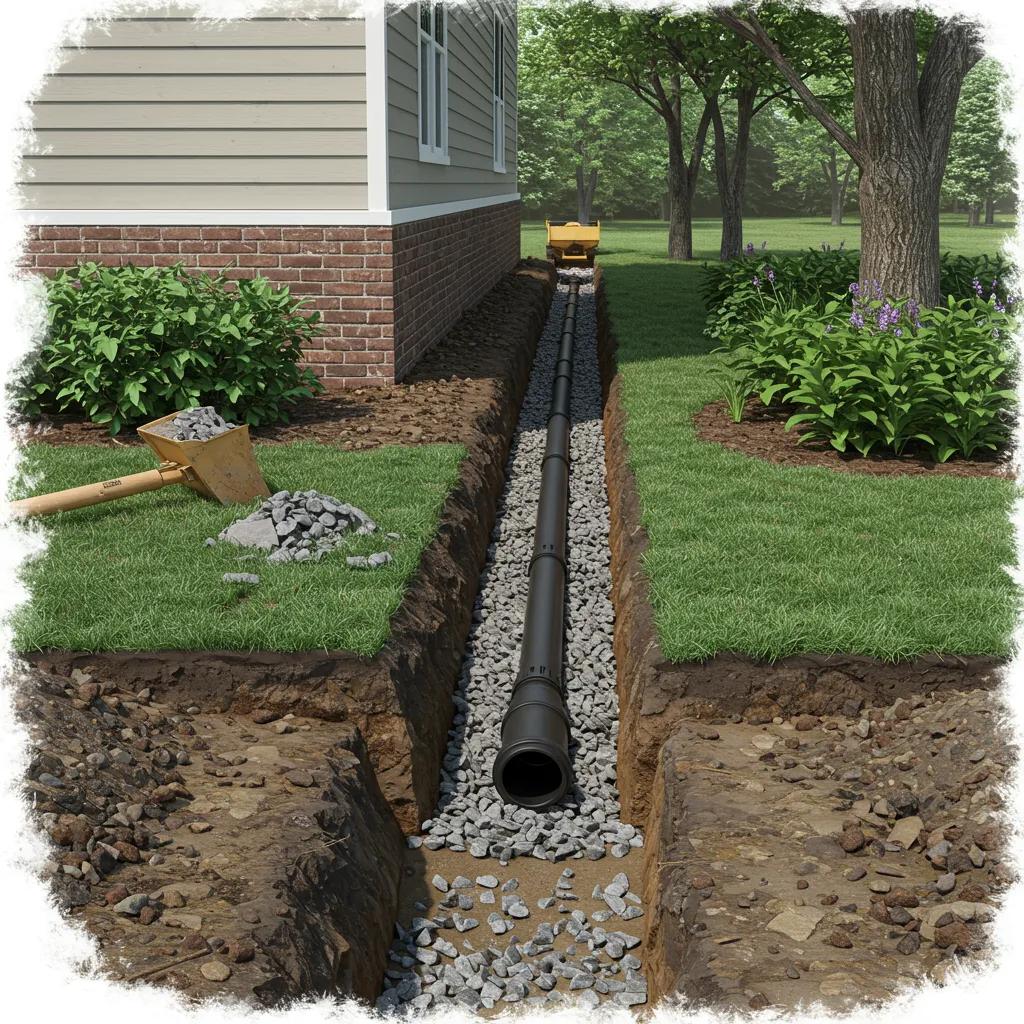
A French drain is a subsurface trench filled with gravel enclosing a perforated pipe that captures and diverts groundwater away from foundations, and it is typically installed when surface grading alone cannot control seepage or high groundwater threatens a building. Installation involves excavating a trench at the low point, installing a filter fabric, placing a perforated pipe on a gravel bed, and backfilling with gravel before restoring surface materials. This solution is effective for soggy yards, perimeter foundation seepage, and other persistent moisture issues and generally requires periodic inspection of discharge points. When combined with surface grading and gutter management, French drains provide a robust multilayer defense against water intrusion.
Homeowners should evaluate drainage performance over seasonal cycles to decide if a French drain or alternative subsurface solution is the right investment.
How Does Erosion Control Protect Your Property During and After Excavation?
Erosion control protects property by stabilizing soils during active earthwork and by establishing permanent vegetative or mechanical measures that prevent long-term soil loss and sediment transport. Temporary measures include silt fences, sediment basins, and erosion control blankets that reduce sediment leaving the site during storms, while permanent solutions include regrading, riprap, and vegetation establishment to secure slopes. Implementing phased clearing and staged stabilization limits exposed area at any time, reducing erosion risk and inspection complications. These controls not only comply with regulatory expectations but also preserve adjacent properties and waterways from construction impacts.
Effective erosion control maintains the functional integrity of grading and drainage systems installed during excavation and reduces downstream maintenance liabilities.
This table helps homeowners select a drainage approach based on site exposure and maintenance expectations, integrating surface and subsurface fixes for resilient results. Understanding drainage options prepares owners for cost and maintenance estimates discussed next.
What Utility Trenching Services Are Offered for Residential Projects?
Utility trenching for residential projects involves excavation and restoration work required to place water, sewer, gas, and electrical lines safely and to code, ensuring proper bedding, separation, and compaction. Trenching must begin with utility locates to avoid conflicts, followed by excavation to specified depth and width, bedding material placement, conduit or pipe installation, backfilling, and compaction testing. Best practices maintain required separation distances between utilities, use protective conduit for electrical runs, and schedule inspections before final backfill. Coordinated sequencing with grading and foundation work minimizes rework and supports an efficient build timeline.
A coordinated trenching plan reduces the risk of utility damage, ensures inspection readiness, and aligns underground work with above-grade construction sequencing.
How Is Water Line Excavation Performed Safely and Efficiently?
Water line excavation begins with accurate locating of existing utilities and ends with pressure testing and disinfection before connection, ensuring potable water quality and system integrity. Safe practices include shoring deep trenches where required, placing bedding sand or pea gravel to support pipe, maintaining manufacturer-recommended cover depths, and performing compaction in lifts to prevent post-construction settlement. Pressure testing and disinfection are completed before backfill to validate system integrity, and temporary bypass arrangements may be required for replacements. Documenting tests and inspection sign-offs protects both homeowner and contractor interests.
Following these steps prevents contamination, reduces repair risks, and helps utilities pass mandatory acceptance inspections.
What Are the Best Practices for Sewer Line and Electrical Conduit Trenching?
Sewer and electrical trenching follow rules-of-thumb for trench depth, slope, and separation: sewer lines require consistent slope for gravity flow while electrical conduits need continuous protection and minimum separation from sewer and water lines. Best practices include maintaining required horizontal and vertical separations, using conduit or encasement where codes demand protection, and compacting backfill in controlled lifts to specified densities to avoid future settlement. Coordination with code inspection schedules ensures trenches are inspected before final backfill. Professional oversight and adherence to code minimize later utility failures and excavation reopenings.
These practices form part of comprehensive sitework coordination that prevents utility conflicts and maintains project momentum.
How Does Utility Trenching Integrate with Overall Sitework?
Utility trenching integrates with sitework through phased scheduling that places underground utilities before final grading and foundation backfill to prevent rework and ensure finished grades remain intact. Typical phasing places major utility runs early after initial rough grading, with service stubs and final connections completed closer to building wrap-up. As-built documentation and accurate trench records help future maintenance and avoid accidental damage during landscaping. Integrating trenching into the broader earthwork plan reduces the number of equipment mobilizations and supports predictable timelines.
Well-coordinated utility work reduces construction sequencing conflicts and keeps on-site teams productive across trades.
- Locate existing utilities before digging: This prevents accidental strikes and costly delays.
- Use appropriate bedding and compaction: Proper support prevents future settlement and pipe damage.
- Maintain required separations and conduit protection: These practices protect service reliability and meet inspection criteria.
An organized trenching strategy ensures utilities are reliable and integrated with grading and foundation work, which is essential for a successful residential construction project.
When Are Residential Demolition Services Needed and What Do They Include?
Residential demolition services are needed when existing structures—such as old garages, sheds, or deteriorated homes—must be removed to clear a lot for new construction, remove hazards, or reconfigure site layout. Demolition scope can include selective interior demolition, full structure removal, slab and concrete removal, and debris handling with recycling where practical. Safety measures such as dust control, containment, asbestos or lead assessments when suspected, and traffic management protect occupants and neighbors. Proper planning for demolition, including staging and waste removal, reduces disruption and prepares the site for rapid transition to clearing and excavation.
Clear demolition scope and sequencing reduce risk and help homeowners budget for disposal, recycling, and potential hazardous-material handling.
What Types of Structures Can Be Safely Demolished?
Typical residential demolition includes detached garages, sheds, small accessory structures, non-structural interior elements, and concrete slabs, with larger structures requiring engineered approaches and permitting. Constraints include proximity to neighboring buildings, presence of hazardous materials, and local demolition regulations that may require notifications or permits. Small structures often permit mechanical removal with careful attention to debris containment, while larger homes necessitate staged demolition and possible shoring of adjacent structures. Evaluating the structure and site constraints determines whether selective or full demolition is the safest option.
A pre-demolition survey clarifies hidden hazards and helps the contractor propose an appropriate demolition methodology and timeline.
How Is Demolition Managed to Minimize Disruption and Environmental Impact?
Demolition management minimizes disruption by scheduling noisy activities during acceptable hours, implementing dust suppression, sorting materials for recycling, and coordinating truck routing to limit neighborhood impact. Containment measures such as dust screens and water sprays reduce airborne particulates, and material sorting recovers reusable lumber, metal, and concrete to lower disposal costs and environmental footprint. Communication with neighbors and clear traffic plans reduce complaints and safety incidents during heavy truck movement. These strategies preserve community relations and reduce long-term liability associated with demolition projects.
- Contain dust and debris with water sprays and barriers: This reduces airborne impacts to neighbors.
- Sort and recycle materials where possible: Recycling lowers disposal costs and environmental impact.
- Coordinate traffic and timing with neighbors: This minimizes disruption and maintains good community relations.
These practical measures help demolition proceed safely, quickly, and with minimal environmental cost.
How Can Homeowners Estimate Costs and Prepare for Residential Excavation Projects in Kentucky?
Homeowners can estimate excavation costs by considering primary drivers—foundation type, soil conditions, site access, and permit requirements—and then applying representative unit thinking to each factor to build a realistic budget range. Preparing the site with clear access, current survey plans, and photographs reduces unknowns in bids, while arranging utility locates and initial permit applications shortens lead times. Transparent cost estimates separate base excavation, rock removal or dewatering contingencies, grading and drainage installations, and utility trenching so homeowners can compare contractor line items. For an accurate project quote, submit plans and current site photos and request an on-site assessment, which helps contractors finalize haul distances, equipment needs, and scheduling.
The following table provides a compact comparison of cost-influencing entities to help homeowners identify which line items will most affect their project estimate.
This EAV-style comparison clarifies where most budgets concentrate and helps homeowners prepare realistic contingencies for bids and contract negotiations. After reviewing cost factors, the next subsection explains how to request a consultation or quote.
What Factors Influence Residential Excavation Costs?
The main cost influencers are foundation depth and footprint, soil and rock conditions, site access and haul distances, dewatering needs, and required erosion-control or permit fees. Foundation type dictates excavation volume and complexity; basements and deep footings require more time and potential shoring than slab-on-grade options. Poor soils or encountered rock raise costs due to specialized removal or replacement with engineered fill, and limited access increases labor and equipment mobilization time. Early soil testing, clear site photos, and verified design plans reduce uncertainty and refine contractor pricing.
Recognizing these drivers helps homeowners plan contingencies and compare bids that separate known scope from potential allowances.
How Can You Request a Free Consultation or Quote from Earth Works, LLC?
To request a consultation or estimate from Earth Works, LLC, homeowners should prepare basic project details such as site photos, a site plan or survey, preferred foundation type, and any utility or access constraints to speed the assessment process. Sharing these documents in advance enables a tailored response that addresses likely soil, drainage, and access challenges and results in a more accurate on-site cost estimate. Typical consultations involve a site visit to confirm grades, measure haul distances, and evaluate erosion-control needs before producing a written estimate. Homeowners who provide clear project scope and documentation receive prioritized scheduling and a focused estimate for excavation, grading, and utility coordination.
This straightforward submission process reduces guesswork and helps both parties align on scope and budget before contracts are signed.
What Permits Are Typically Required for Residential Excavation in Kentucky?
Common permits for residential excavation include building and grading permits, erosion and sediment control or stormwater permits, and utility connection permits with required locates before digging. Municipalities may require erosion control plans and inspection sign-offs at key phases, while utility companies often mandate separate connection permits and testing. Early contact with local planning or building departments clarifies submission requirements and timelines, which prevents work stoppages. Homeowners should budget for permit fees and allow lead time for approvals when scheduling excavation to align with broader construction timelines.
Securing required permits in advance ensures compliance, protects neighboring properties, and reduces the risk of costly remediation or enforcement actions during construction.
Where Can You See Examples of Successful Residential Excavation Projects by Earth Works, LLC?
Earth Works, LLC documents project outcomes through before/after imagery and succinct case summaries that highlight how site challenges were resolved—showing soil mitigation, dewatering, drainage correction, and schedule recovery in real Kentucky projects. These project highlights demonstrate practical problem-solving such as managing high water tables with temporary dewatering and permanent perimeter drains, or overcoming access constraints with staged equipment mobilization. Seeing how specific technical steps translated to on-time foundations and clean final grades helps homeowners evaluate contractor capability and approach. Homeowners are invited to request an on-site assessment to review comparable projects and discuss how similar solutions would apply to their sites.
What Challenges Were Overcome in Recent Kentucky Residential Foundation Projects?
Recent project summaries show common challenges such as unexpected rock, high groundwater, and tight lot access, and they describe the mitigation measures used—like small-plant rock removal, dewatering wells, and staged material handling to maintain schedules. For example, sites with perched groundwater required temporary wellpoints and perimeter drains to allow safe excavation and concrete placement, while rocky substrates were managed with targeted breaking and selective haul-off. These case studies emphasize communication, phased planning, and contingency execution to keep projects moving despite unforeseen conditions. Reviewing these solutions helps homeowners identify realistic contingencies and mitigation costs in proposals.
Understanding real-world solutions clarifies how contractors convert design intent into reliable site conditions for foundation work.
How Do Before and After Photos Demonstrate Our Expertise?
Before-and-after photos illustrate measurable improvements in site grading, drain installation, foundation footprint accuracy, and final erosion control stabilization, offering visual proof of workmanship and technical decisions. Captions focusing on the problem, the corrective action (for example, installed French drain or rock removal), and the measurable outcome (improved grade, drained footprint) help homeowners interpret what to look for in project imagery. These images also show how temporary erosion controls were maintained during work and how final grading supports landscaping plans. Visual evidence often communicates project quality more directly than words alone and supports informed contractor comparisons.
Photos paired with concise explanations highlight the technical competence behind earthmoving decisions and the visible benefits on finished sites.
What Do Our Clients Say About Our Residential Excavation Services?
Client feedback commonly praises timely communication, adherence to schedules, and clear explanations of scope and contingencies that reduce surprises during construction; these recurring themes indicate a consistent focus on project management and workmanship. Prospective clients can view summarized comments and request references or project summaries to validate a contractor’s approach on similar sites. Transparent post-project summaries that include schedule adherence and budget performance support informed decision-making when selecting an excavation partner. For homeowners seeking a reliable local provider, reviewing practical feedback and project documentation helps align expectations and contract terms.
Accessing representative project outcomes and client perspectives aids homeowners in choosing a contractor that matches their priorities for schedule, budget, and technical competence.